Monday, July 18, 2022

Free Adult Biking Classes In Chicago

This is part one of a series covering some of the resources and opportunities that are available to those living in Chicago.

This past week I took advantage of some of the programs that the city of Chicago offers to learn to ride a bike. The trainers were super nice and really good at suggesting different methods until you found one that worked. You also were given plenty of time to go at your own pace. While I am not sure if I shall put in the effort to continue I might depending on several other factors.

I got a nice free helmet to keep for participating and as an added bonus taking one of the free bicycle riding classes means I have the possibility of getting a bike through the city. 

(There are a limited amount so I'm not holding my breath but it would be cool to have a bike and make continuing to practice bike riding easier since the location i went to learn was a little over an hour and a half bus ride so not super covenant )

Here is the info on the classes:

The SAFE Ambassadors’ free bicycle-riding classes are two hours long and designed for Chicago residents age 16 or older. Each two-hour class allows pre-registered Chicagoans to learn, based on their experience level, the skills they need to be comfortable riding a bike. This year the SAFE Ambassadors will offer classes in both English and Spanish to better meet the needs of city residents and serve more people.

Beginner Learn to Ride is for those who don’t know how to ride a bike yet, as well as people who learned long ago and would benefit from a refresher course. Classes are taught on a car-free course.

Skill-Builder Learn to Ride is for people who have completed the beginner course and those who already have basic riding experience. These lessons will support development of skills such as signaling, turning and interacting with other people biking or walking. The Skill-Builder class will also provide instruction to help riders interested in preparing to bike on city streets. This class will also be conducted on a car-free course.

Road Ride is the advanced class in which SAFE Ambassadors will ride with students on city streets to help them experience everyday situations and build confidence. Topics covered include how to plan routes to your destination, the different types of bike lanes, and how to position yourself on the street in various traffic situations. The course is designed to help Chicagoans expand their understanding of how to travel by bike all around the city.

Here is the info on getting a free bike

The Chicago Department of Transportation (CDOT) has set an ambitious vision to make cycling a safe and affordable option for more Chicagoans. In addition to connecting bike networks and increasing the number of low stress and protected bike lane miles in the city, 
CDOT will facilitate more residents cycling through a bike distribution program.CDOT will distribute 5,000 bicycles, as well as safety and maintenance equipment, over the course of 4 years to age and income eligible residents. 
For the first year of the program, the bikes will be distributed to participants in 2022 CDOT mobility programming (Green Corps, Learn to Ride, and Open Boulevard Events), and first come first serve for residents that qualify. Depending on demand, the City may implement a lottery for years 2-4 of the program for residents that qualify. Online and paper applications will be accepted July 18th- August 4th. There will be no preference between paper and online applications (they will be ordered by the date submitted or postmarked). 
For qualifying residents, bikes will begin to be distributed in August 2022, and will continue to be distributed each Spring/Summer of the following four years until 5,000 bikes are distributed.

Eligibility

Chicago Residents 14 and older (those under 18 will need a Guardian’s signature on a liability waiver);
AND 
Have a household income at or below 100% of the Area Median Income for Chicago (see chart);
AND
Do not already own a bicycle;
AND
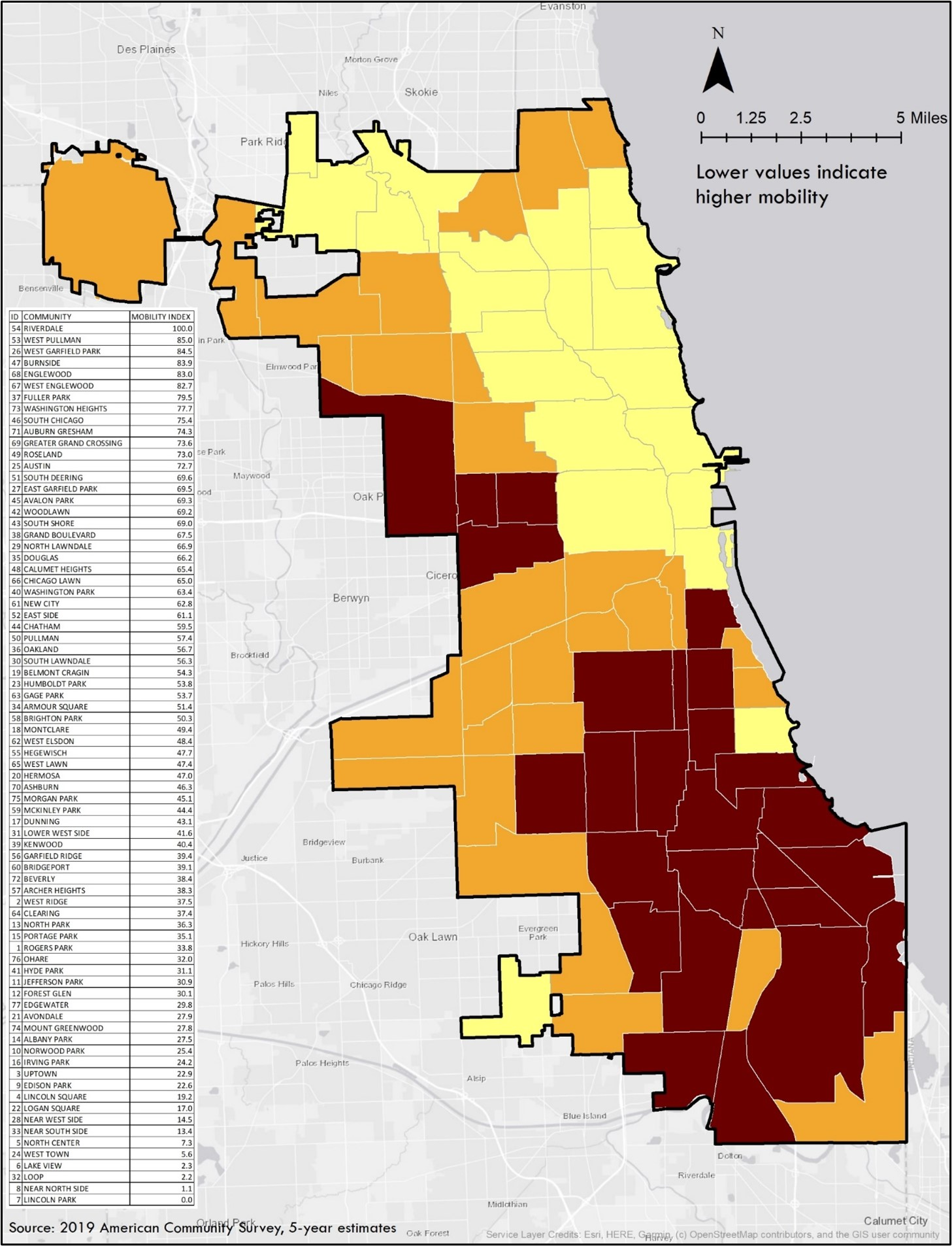
Residents that face higher mobility hardship (see map); OR Participants in CDOT 2022 mobility programming (Green Corps, Learn to Ride and Open Boulevard Events)

Saturday, July 16, 2022

Come GISH With Me


I will be once again doing GISH which is a week long event/activity/celebration/change-the-world thing. There are always a range of "tasks" some involving writing, some involving art, some involving being social, some involving puzzles, some involving building things. It does not matter where you live across the globe, if you are unable to leave your home, or if you are the most social bumble bee out there there is a place for you.  

In addition there will be lots of livestreamed panelists including the below giving you a taste of what GISH is like

Some facts:

  • This year part of the registration fee is helping relocate medically fragile refugees and disabled refugees in the Ukraine who otherwise could not get out.
  • And if the registration fee is too much there are gish-scholarships they want as many people to play as possible
  • This year the winning team gets a free trip to the amazon (Ecuador area I am pretty sure)
  • This year our mascot is Chillax part chinchilla, part axolotl – but all good vibes!


So come and join me in a week of wildness. It does not matter who you are, you will have a great time. Here is a link to join my team DreamingAcesWild and my referral code is 6890CE in case you need it. https://hunt.gish.com/join_me.php?t=41402

Friday, July 15, 2022

9-8-8 Is Finally Here


Starting June 16th 988 is here. 

I have supported the move to 988 for our national suicide and crisis lifeline and have sent various messages to my elected officials to keep it going and to work to give 988 the funding it needs to work. 988 is so important because when someone is in crisis or knows someone in crisis remembering a long phone number is likely the last thing of their minds. (As was shown in this comedic clip from the IT Crowd*)  988 is much easier to remember. 

Here is are some selections from an article on NPR
The new 988 crisis number is about to launch. Here's what to know
July 15, 2022 by RHITU CHATTERJEET

Starting July 16, people in mental health crisis will have a new way to reach out for help. Instead of dialing the current 10-digit National Suicide Prevention Lifeline, they can simply call or text the numbers 9-8-8.

Modeled after 911, the new 988 Suicide & Crisis Lifeline is designed to be a memorable and quick number that connects people who are suicidal or in any other mental health crisis to a trained mental health professional.

Currently, the majority of people experiencing a mental health emergency end up dialing 911.

The problem is that 911 wasn't set up to address mental health needs. Either callers end up in a frenetic emergency room, waiting for hours and sometimes days to get care, or they end up interacting with law enforcement, which can lead to tragedy or trauma.

The goal of the effort behind 988 is to ultimately reduce these kinds of confrontations with law enforcement and connect people in crisis to help right away. It's part of a longer-term effort to ramp up mental emergency response teams around the country.

The 988 lifeline will connect people to the existing network of more than 200 local crisis call centers around the country. (The 10-digit suicide prevention number — 1-800-273-8255 — will remain active, but calls will be routed to 988 once that three-digit number launches.)

People who call or text the number will be connected to a trained counselor at a crisis center closest to them. If a local crisis center is too busy to respond right away, the call gets routed to one of 16 backup centers around the country.

According to the HHS, in 2021 the lifeline received 3.6 million calls, chats and texts. But a 2021 report by SAMHSA found that the current system is able to respond to only 85% of calls, 56% of texts and 30% of chats.

Health officials project that the number of calls, chats and texts will at least double in the first full year after 988 goes live.

To prepare for this rise in demand, the federal government has made significant investments in the network.

More than $400 million — up from $24 million — has gone toward beefing up the capacity of local and backup call centers and providing associated services, including a subnetwork for Spanish speakers, according to a statement from the HHS.

And he's already seeing an impact on the lifeline's ability to respond to those who reach out, he says. For example, he says, "right now we're answering over 90% of our chats. And this time last year it was closer to 20 to 23%."

It will take time for 988 to reach its ultimate goal, advocates say.

"The transition to 988 has come to represent a once-in-a-generation opportunity to revisit and reconceptualize how crisis services are resourced and delivered in communities across the country," says Colleen Carr, director of the National Action Alliance for Suicide Prevention at Education Development Center.


*I am in no way making fun of people in crisis but the clip clearly shows that long phone numbers don't tend to be useful in an emergency

Wednesday, July 13, 2022

Free Classical Music Available To All


This summer has been filled with hearing a lot of classical music here in Chicago. 
The good news is most of this music is streamed online and available from anywhere.
 Here are some weekly concerts you can listen to. 
(Note all times are in central time)
Mondays:

Live from WFMT/ (Streamed on WFMT radio, WFMT website)

Live from WFMT, the station’s full-length recital series, presents weekly music and conversation from October through June Mondays at 8:00 pm. Starting in July, Live from WFMT goes on hiatus. Mondays at 8:00 pm will feature broadcasts from the Ravinia Festival.

Tuesdays:

Rush Hour Concerts  St. James Cathedral (Streamed on their website and YouTube)

The series of 45 minute concerts is held on Tuesday evenings throughout the summer (June-August) at 5:45 p.m.

Wednesdays:

Dame Myra Hess Memorial Concerts (Streamed on WFMT radio, WFMT website, the WFMT YouTube)

This series of 45 min concerts is held year round on Weds at 12:15pm. 

Wednesdays, Fridays, Saturdays:

Grant Park Music Festival has mainly classic music 3x a week during the summer. The Wednesday night concerts often are streamed on (Streamed on WFMT radio, WFMT website, the WFMT YouTube)

Fridays:

Friday Noonday Concerts Fourth Presbyterian Church

This music series is held year-round on Friday at 12:10 can be found on their YouTube (too see past concerts look through their videos for those labeled Friday Noonday Concerts

Thursday, July 7, 2022

Celebrities STOP Being TRANSPHOBIC!!!


Currently in the news are several celebrities who have been tweeting transphobic comments. This is not new, celebrities keep doing this again and again. (Sadly I think this post is going to be evergreen content because it will be a while before everyone stops being transphobia)

I think one issue is the fact that individuals who have uteruses are being criminalized in many places such as in the recent supreme court ruling so others do not want to deal with nuance or precision. 

Another issue is there are some individuals who don't comprehend that language has changed over time because the idea that language can change confuses them. 

Now it is fine to say I am not sure what the current language I should be using is in this case. We can both not know what language we should be using and not dismiss the fact that language has been changing.

Case Study: Menstruators/People Who Menstruate. 

While many individuals who are transphobic really struggle with this language Menstruators/People Who Menstruate is a clear example of why such language is important. 

There are a wide range of people who were assigned female at birth who do not menstruate:
  • Those who have not reached puberty
  • Those with amenorrhea caused by medications such as antipsychotics, cancer chemotherapy, antidepressants, some blood pressure drugs, some allergy medications
  • Those on various forms of birth control such as the pill
  • Those who are currently pregnant
  • Those who have had hysterectomies
  • Those who have reached menopause
So if an group was providing menstruation products to individuals who otherwise would not be able to access or afford them these services would not apply to all the above groups. In this case it is clear that saying people who menstruate is the most useful language. 

This is true of a lot of the other language that is now used that seems to upset many individuals to the point they make transphobic comments. Terms such as assigned female at birth, birthing people, people with vaginas, people with uteruses etc. 

Each is referencing a different community of people and while yes there tends to be some overlap between the groups there are individuals in each category who do not fit within each of the other categories.

Now with how quickly language and understandings around gender, sex, sexuality, and other identities changes it is ok if we make a mistake and use the wrong term, (everyone will use the wrong term or an outdated term at some point) the problem is when we double down on using the wrong word and refuse to learn when someone points out our mistake. 

Using language that makes those assigned female at birth, cis-women, trans-women, those who are nonbinary or genderfluid all feel safe is not attack on the term "women" anymore than saying you are from a particular state is an attack on the term "American." 

We can understand if someone uses the term "New Yorker" and would not say "No don't say you are a New Yorker you are only an American." We can also understand there might be cases where a "New Yorker" is not an "American" or an "American Citizen" 

(Such as someone who is from Britain but has worked in NY for decades might consider themselves both British and a New Yorker but not an American) 

So why is saying those who mensurate, assigned female at birth, birthing people, people with vaginas, people with uteruses etc. so much harder to understand as a concept?

Monday, July 4, 2022

Hopes For Impendence From What Is Holding Us Back


The last few weeks have been hard for so many of us so the idea of celebrating today might feel like a challenge. One way to handle some of the emotions and feelings that today's holiday might bring up is to expand what type of independence we are seeking. There are many things we can hope to be independent from as a nation, as communities and as individuals.
 
4th of July

A day we celebrate independence

As a nation may we have independence from
Racism, Sexism, Homophobia, Transphobia
Biphobia, Ablism, Ageism, Classism

As communities may we have independence from
Not understanding we are bound up together
Not seeing or hearing each other

As individuals may we have independence from
Isolation, Fear, Want, Loneliness, Self doubt
May we always know that we are loved and we are beloved

My hope is we can use this day to take time to determine what we need to do for ourselves so that we all can be our best, our boldest, our brightest selves and have the energy we need to organize in order to tackle all the injustice and isms and phobias that systematically keep others down. 


Friday, July 1, 2022

My Connection To Benjamin Britten


Britten was an English composer, conductor, and pianist. He was a central figure of 20th-century British music, with a range of works including opera, other vocal music, orchestral and chamber pieces. This week the Grant Park Music festival is playing/singing Benjamin Britten's Spring Symphony.

Now I always get a kick out of going to concerts that include Britten's music since I have a historical connection to him. In 1939 he spent time hanging with my dad's side of the family on Long Island and there are a few fun stories to come out of that. 

(The below come from my dad's summary of the family stories so his father is my grandfather, and his grandfather is my great-grandfather etc.) 
In 1939, Benjamin Britten, then a struggling young classical composer, visited the U.S. for several months. In the course of his wanderings, he ended up on Long Island, and took the opportunity to spend some time as the guest of my grandfather, who was very active in the local classical music scene.

He spend a weekend building model airplanes with my father (14 at the time) and working a bit in the store. When it was time to leave, he made the surprising announcement that he was giving up writing music and wanted to go to work for my grandfather full-time.

My grandfather thought he was crazy. He'd already had pieces performed by major orchestras, including the New York Philharmonic.

My grandfather point blank refused to take him up on the offer. "What do you want?" he asked. "Blood?"

Eventually, Britten changed his mind and went back to England to become a major success as a composer of opera music.

Fifty Years Later

In 1992, Humphrey Carpenter was writing a biography of Britten. During the course of writing, he got in contact with my father. They corresponded and Carpenter used photos of my father and grandfather in the book. Then, Carpenter invited my father as a guest to the Alderburgh Music Festival (founded by Britten). By that time, the book (with photos) was already published in England . He was wined and dined at a special reception for patrons of the festival, and people kept coming up to him, saying, "I know you. You're Bobby Rothman." My father was delighted at being a celebrity.

The next day, Carpenter asked my father to come by to answer some questions about Britten for the archives. Carpenter set up a tape recorder, started it, and asked the first question:

"Did you know that Benjamin Britten was in love with you?"

Yes, Britten always had an attraction for teenage boys, and my father was the apple of his eye, so much so that he was willing to give up music just to be with him. At the same time, Britten was extremely discreet about it, and rarely showed anything overt. (Years later, my grandfather could not accept the fact that Britten was gay, despite the fact that Britten had had a long-term relationship with tenor Peter Pears. "Not Ben," he said when someone mentioned the fact.)

Needless to say, this was the first time my father had heard of it. His answer was simple: "Turn off the tape recorder!" He also wasn't too happy about the people recognizing him the night before......

You can find the full story in Carpenter's biography of Britten.

Now I find it super cool that Benjamin Britten had a squish/crush/summer something on my grandpa even if it was unidirectional and nothing much came from it. (And Britten sure was discreet indeed since the only thing that ever happened was a single time when Britten gave my grandpa a peck on the forehead (I think shortly before he went back to England but I might be remembering wrong) but at the time my grandpa just assumed it was a British thing LOL) 

My dad's side of the family ended up hanging with lots of cool people Benjamin Britten and Albert Einstein but that is a story for another day.  

Finally here is some family footage of Britten hanging with my family with the arrangement of the some The trees they grow so high dedicated to my grandpa.