Tuesday, August 27, 2019

Notes from Gun Violence Teach-Out

The University of Michigan is hosting a free "Preventing Gun Violence in America Teach-Out" through coursera. The Teach-Out has multiple expects who discuss the complexities of this issue from different angles. I would recommend this Teach-Out. (It is pretty quick and can be covered in an hour or two) 

My personal responses to some of the discussion questions raised are posted below. Consider what your own responses might be.

At the end, we were asked if we had any questions. I am putting my answer to this first because I think it helps provide context to my answers overall.

How do we increase funding for this research? How can we make this type of research more "sellable" ie newsworthy? How can we change the conversations around topics such as gun violence and suicide when there is deeply ingrained pushback to the discussion in society?

Do guns play a role in your life? Is there anything you wish people with different perspectives than you understood relating to guns? What changes do you want to see in your community related to gun violence? Are you hopeful or concerned about how these changes will come about?

I live in Chicago so my relationship with Guns is that they are harmful. No one I know uses Guns for hunting etc and I struggle to balance the idea that people feel they need guns when guns appear to me to be equal to death and pain and sorrow. In my experience guns are only used in mass shootings, in the military, by cops killing unarmed individuals (typically unarmed people of color) or in other violence. As items which kill I struggle with the pushback, many have to what feels like to me sensible gun laws.

Though media and a lot of our conversations center on mass shootings or assumptions about mental health, this Teach-Out highlighted how gun violence plays out interpersonally or through self-harm and that very, very few incidents of gun violence come from a person with mental health diagnoses. If this is a new understanding for you, how does it impact your thoughts on gun violence? If you were already aware, how can we start shifting our conversations?

I was already aware that gun violence was rarely instigated by a person with a mental health challenge. But it was not until recently that I started to think about the role that guns play in suicide (oddly I learned this from a candidate who released an envolved platform around mental health and suicide because they are part of populations which have had a higher tendency towards death by suicide).

I wonder if we frame our discussions about guns more around suicide prevention if certain suggestions could be seen as protecting gun owners and gun owner families themselves which I would imagine would feel less "threating" towards peoples way of life.

Like childproof caps on medicine, people complain, and for some populations like the elderly it can be a real pain but most people understand why we have childproof caps and don't see it as someone keeping medicine away from them. Or using a gun example seeing a waiting period as a way to check if you are in an acute mental health crisis not keeping you from guns.

You’ve heard experts compare gun violence and other public health issues that should be studied and prevented, like the introduction of seat belts or drivers’ license rules to react to car crashes. Have you thought about gun violence this way before? What kind of different feelings or thoughts come to you when you think about gun violence with this public health frame?

I think a Public Health frame is useful when looking at issues around Guns. There has been a general sense that Gun Violence is something we can't actually look at or study which means the conversations come up only during heated moments (when there is a mass shooting or a police officer shoots a civilian). These are no good moments to try to have complex conversations about complicated issues. We need to do more research on Guns and Gun usage.

Gun-Violence is a complex issue which is often only spoken about during heated moments of crisis. We have to be willing to have these conversations at other times. We also need to fund the research which could help us deal with this issue. Not funding this research is not making anyone safer. 

Wednesday, August 7, 2019

What Can I Do? A List Of 33 Actions

This past weekend we faced more tragedies in the form of the mass shootings in El Paso and Dayton. Collectively there are so many struggles in so many contexts it feels overwhelming. What can we do? This meme created by Amanda Michelle shows there are many ways to fight for social justice.


Here is a list of actions you can do right now. Some are individual work and some are community work. Note you do what you need to do knowing your own gifts and resources. This is a starting off point there are millions of other things you can do too.

Self-reflection*

  1. Spend an extended time reflecting/journaling on your own prejudices. We all have prejudices name them to yourself, sit with them, don't judge them.
  2. Examine where your prejudices are rooted (In a lack of exposure? In what your family or community says or does? In something, you feel you are missing and see as others taking away from you?)
  3. Examine the prejudices of your own family/community (Again we all have prejudices name them to yourself, sit with them, don't judge them.)
  4. Examine where your communities' prejudices are rooted (In a lack of exposure? In a feeling of being attacked? In the idea that things are good and the community and the communities' individuals don't have any prejudices)
  5. Reflect on how prejudices are supporting you (why they are working for you so you keep them) and how prejudices are harming you (Why do you want to create change)

Learning*
  1. Read books by authors with backgrounds unlike yours (If you are just beginning I might suggest reading kids books because they often ease you into a particular culture or identity)
  2. Watching/Hosting documentaries exploring issues/cultures you are not familiar and having conversations
  3. Reading blogs of individuals from cultures you are not familiar
  4. Inviting someone out for a cup of tea to discuss their experiences
  5. Respectfully going to another religion or culture's events. (Maybe a street festival, Maybe a worship service you don't know much about (The key is to be respectful most faith traditions are welcoming will list expectations for visitors such as dress etc), Maybe going to an interfaith event)
Community Organizing:
  1. Join a local, regional, or national community organizing organization
  2. Have conversations/ one on ones with your neighbors/co-workers about what they value
  3. Go to an organizations community organizing training/anti-racism training ....
  4. Complete a power analysis around one issue you care about (One example: https://justassociates.org/sites/justassociates.org/files/toolsforanalyzingpower.pdf
  5. Think of an interesting and peaceful way to raise support around your community for something you value (Such as a guerilla theater, a postcard campaign, picketing, writing an op-ed ....)
Involvement in politics:
  1. Know All your representatives on the national, statewide, and local level
  2. Look up what different positions in government actually do
  3. Research what laws and rules are being debated on your local level right now.
  4. Support a candidate by donating or by canvassing
  5. Run for office yourself
Other:
  1. Sign a petition/Share a petition/Start a petition
  2. Donate school supplies/Health and wellness items/Books/Clothing
  3. Volunteer your time the most vulnerable
  4. Write a letter/op-ed/poem/story/speech 
  5. Find a new way to talk about an issue:  https://www.facebook.com/jim.poe.98/posts/10156632733008107
  6. Donate culturally sensitive materials to programs working with youth
  7. Go to a justice summit/community meeting/teach-in
  8. Determine what a food pantry/battered women's shelter/group working with immigrants or refugees really needs to be donated and donate it or get others to donate it.
  9. Help non-profits using your skills through programs such as https://www.catchafire.org
  10. Support local businesses both formal (Restaurants, Bookstores) and informal (Kid-run businesses/part-time side hustles/community fundraisers)
  11. Encourage someone else to continue to fight for justice
  12. Talk about what you are doing, so others can be inspired
  13. Take Care of Yourself
* (While Self-Reflection and Learning are needed actions we must move beyond, or move forward with into other action. If this is where you are, start here but if you have been doing work in these areas for a while make sure you are moving on to other work)


Saturday, July 13, 2019

Radical Justice: Stepping back and Stepping forward

Image may contain: text

Today was Lighthouse Foundation's Racial Justice Summit: Boystown & Beyond. The Lighthouse Foundation has developed out of a recognition that a) there is a need for an organization which focuses on the African American LGBTQ+ population's justice needs in Chicago b) while the faith community I am apart of, Lighthouse Church UCC, is uniquely situated to work on these justice issues we needed to create new structure to scale up the work. 

It has been interesting to watch the creation of a new foundation. I have found the process to be "good challenging" and found it has led me to personal reflection about what spaces are for me and which spaces are not for me. 

As part of the Lighthouse Foundation, CARE (Coalition of Allies for Racial Equality) is being developed. This is the branch (or however you want to describe it) which is, to be blunt, for us white folks. This is the space that is being opened for us, with clear action items being provided (more to this point in a moment). It has been "good challenging" to realize that the space for us within the Lighthouse Foundation is within CARE. The Lighthouse Foundation itself is not our space. 

Historically even well-intentioned whites have had a tendency to see all spaces as our spaces and again historically often take over these spaces because we think we know better than those whose spaces the spaces belong to. As one of the pastors who spoke this morning said "we need to get out of the way" in situations such as this. Looking forward and knowing there will be times where the Lighthouse Foundation creates spaces that are not for me and knowing I will need to stay out of the way is challenging and important. 

On the other hand, there will be moments where CARE and I will be asked to step forward in clearly defined ways (sometimes by providing monetary and physical resources and sometimes literally stepping forward to march or demonstrate). CARE is being called to move beyond Studying and Planning and towards Executing and Measuring change.

Case Study: It was mentioned at the summit that at least one organization/group said they were unable to come to the summit today because it was at the same time as their racial justice committee meeting. This was used to highlight the need to move beyond exploring these issues and actually taking steps to make a change.

So as Lighthouse Foundation grows and develops I will continue to have to wrestle with knowing which spaces are for me and which spaces are not for me. I will also have to continue to wrestle with my role as an ally and supporter and learning where I am needed, not always necessarily where I want to be. Sometimes the best way for me to stand in solidarity will be to stand aside, other times it will be going where I am sent. 

Some of this process will be uncomfortable but I commit to the discomfort in the name of Radical Justice for all. 


Monday, June 17, 2019

Babylon 5: Faith and Mental Health

Image result for babylon 5 opening 
It was the dawn of the third age of mankind .... The Babylon Project was a dream given form. Its goal: to prevent another war by creating a place where humans and aliens could work out their differences peacefully. It's a port of call, home away from home for diplomats, hustlers, entrepreneurs, and wanderers.... all alone in the night. It can be a dangerous place, but it's our last best hope for peace. This is the story of the last of the Babylon stations. The year is 2258. The name of the place is Babylon 5. (Selections from the opening for  Season 1)
I grew up watching the show Babylon 5 (B5) and I have been thinking about its impact because a friend is watching the show for the first time. It was a major part of my creative daydreaming at the time (and I have to highlight "creative", I doubt too many others were having B5/Cadfael/Pretender crossovers in their heads).

Part 1:
"The molecules of your body are the same molecules that make this station and the nebula outside, that burn inside the stars themselves. We are star-stuff. We are the Universe, made manifest, trying to figure itself out. And, as we have both learned, sometimes the Universe needs a change of perspective."
From the epasoide: A Distant Star
B5 also had a large impact on my views of faith and religion. I took to heart that we are bits of the universe trying to figure itself out and developed my faith around this idea. I did not grow up with deep roots in any one faith tradition (outside a  few Jewish and Christian holiday traditions) so this made sense. For a long time (and sometimes still today) I talk about "The Universe" in a way similar to how others speak about God or Gods. "The universe" was my opening to faith and is still the language I am most comfortable with even as I learn to appreciate the many other names used by faith traditions. Looking back I am grateful for B5 for laying a faith foundation I have slowly built upon. (I could go into more detail about certain characters and plot arcs but want to keep this spoiler free for my friend)

Part 2:

Image result for jeffrey sinclair

For the first season, Michael O'Hare played Commander Jeffrey Sinclair. Sinclair was a very interesting character and whose character was taken in interesting directions later in the show. Somewhere back at my parent's house I have his autograph that my dad got for me when he went to a con, (I don't remember which one). 

It was not until much much much later that we learned about the mental health struggles he faced while on the show. Here is J. Michael Straczynski discussing Michael O'Hare's battle with mental illness. (The clip contains a few spoilers for the show and his character. If you choose not to watch his struggles were similar to the struggles portrayed in the film A Beautiful Mind) 


For me, the take away is you never know what others are going through. You never know what others are struggling with. And in the end, we can never talk about mental health issues enough.


Wednesday, June 12, 2019

3rd Anniversary of Pulse ... A Reflection


Today June 12 is the 3rd Anniversary of Pulse

Image result for pulse nightclub victims photos

Today I listened to their names once again


Today I Re-Read Love is Love


Today I donated and remembered what I wrote right after Pulse Occurred

Orlando Sunday

I would have written
Different words
On a Different Topic
But today 
Tragedy came
And not to speak of it
Would be another form of tragedy

We morn for Orlando
We morn for all those who were killed
We morn all those who were injured

In a time a place
When we have become numb
To the Tragedies all around us
This hits home
In a hard to explain way
That brings tears
To my eyes at random moments ever since 

We morn for Orlando
We morn for all those who were killed
We morn all those who were injured

Where being bold and big and beautiful
Leads others to hate
Where the sanctuary and safety of clubs and dancing
Is destroyed in a moment
When today's tragedy echos back through time
Reverberations of Stonewall
Reverberations of The UpStairs Lounge Fire
Reverberations of Today's all too frequent killing of Queer Trans Women of Color

We morn for Orlando
We morn for all those who were killed
We morn all those who were injured

We will morn
For what has been
For what still is
And we will face our fears
Knowing our safety
Knowing our community
Are ever fragile things.

We morn for Orlando
We morn for all those who were killed
We morn all those who were injured

We will grab the hands of history
And stand hand in hand
With each other
With all those struggling
To let their amazingness shine through
We shall not be moved
We Shall Not Be Moved

We morn for Orlando
We morn for all those who were killed
We morn all those who were injured

Someday we will truly be free
Someday the arch of justice will finally reach the ground
Someday this will become History
Not History repeated
Today was a great Tragedy
But tonight I light a candle and stand in hope
In the wise words of Lin-Manuel Miranda
Love is Love is Love is Love is Love is Love is Love

Privilege, Passing, Pride

There have been so many tragedies over the years
Which could not be escaped
But this one hit close to home

I have been searching my soul
And wrestling with the privilege I have
As a HeteroRomantic Ace

The privilege of others lack of imagination
Which lets my identity fly under the radar unnoticed, unhated

The privilege of safe places and safe communities
Of a recent History where it felt like, we all who are people of the LGBTQ rainbow, had only found victories and celebrations and steps forward.

The privilege of “Passing”
Of not having to worry about each held hand or each stolen kiss
Like so many of my brothers and sisters do

Pride in my identity as Ace
But knowing I will always have privileges that others do not
And always feeling like I am trespassing on LGBTQ Holy ground

I have no answers
Only Questions

I Have Privilege
I am Passing
I am full of Pride

But as I keep being reminded
I will never truly feel
What so many of my brothers and sisters feel everyday

The Fear
The Sorrow
The Uncertainty

I mourn for my community

--------------------------------------------------------------------------------------------------------------------------

And tonight on this 3rd anniversary 
I shall have a dance party in their honor 
Because as my T-shirt today says

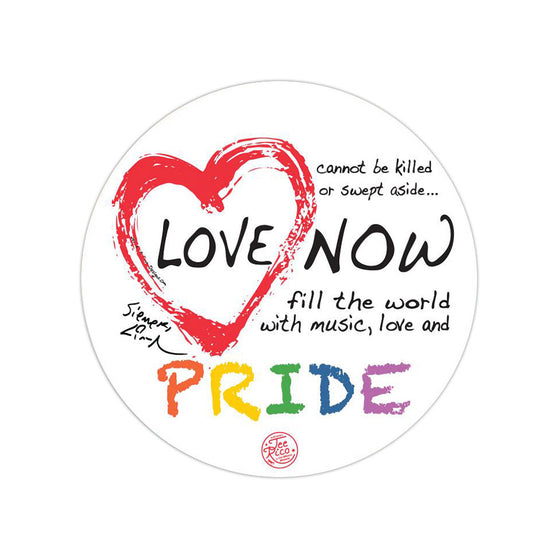
Love Is Love Pride - Removable Vinyl Bumper Sticker


Sunday, June 9, 2019

Pentecost, Pride, Protest*


Image result for pride flag brown and black

This year is the 50th anniversary year of Stonewall and many have used this history as a call for protest in this day and age where there are so many things and ideas and people who need to be protested.  There has been a refocus on the queer people of color who started the riots and who started the modern day LGBTQ+ rights movements. The same queer people of color who face the greatest hardships still today.

Now I will start by saying others have said that words are not enough, that action is needed too. I completely agree with this but I still think there can be power in a very sharp pen. So here are my reflections on my church and the power of justice movements.

Recent situations in Boystown (one of the predominantly LGBTQ+ areas here in Chicago) have refocused individuals and groups attention to issues of racism which are still present. In too many establishments parts of individuals identities are welcomed but other parts are not. Individuals have to choose if they want to be welcome because of the LGBTQ+ identities or their identities as people of color but rarely are welcomed for both.

In response to the situation, Lighthouse Church of Chicago (My Church which is a predominately African American LGBT inclusive community) has taken to the forefront and has already created a broad coalition. Within a week we have had a protest with 75-100 people attending, a community meeting with 75 people attending, and a meeting after church making sure we have a consensus around moving forward. As our Pastor Jamie Frazier (Pastor J) said we are uniquely placed to be on the more radical edge of this movement because we are not beholden to government money or other such limitations.

As keeps being restated this is not the beginning of a movement this is simply the most recent chapter or volume of the movement. Now we are in the first few weeks where everything seems shiny and possible but sitting in on the various meetings so far I feel a real sense of both energy to do something and a real sense of hope. A sense that we stand on the shoulders of others and that we are not alone in the fight and that we have many allies who will support our efforts. A sense that we are empowered (by the Holy Spirit or God or the Universe or whatever you want to imagine).

I have a sense we really have a good idea of what we can accomplish. As Pastor J says "We can do everything, but only one thing at a time". We stand on earlier chapters of this battle and it shows. Our organizing feels very mature? (not sure the best word), very thoughtful, very energized, very in it for the long hall, and so very possible.

For me a white ace ally, I feel like how I imagine it must have felt like during the early civil rights movement. I am grateful for my church and all its community and denominational allies. There are so many people who want to make a difference and I feel like we have a chance to make that difference. I hope that my skills and talents can be used by others.

Pride started with a protest, this is one protest I am involved with. What protests are you involved with? How can you be an ally to others fighting? What are you going to do this month of pride and going forward? There "Ain't No Mountain High Enough" to keep us from justice.


* The title of this weeks post comes from Pastor Jamie Frazier's sermon this morning at Lighthouse Church of Chicago

Monday, June 3, 2019

Pride: A Rainbow Filled History


This is the beginning of Pride which can be a wonderful celebration but also tends to be a time when LGBTQA+ history gets whitewashed. This month I am sharing info on a different LGBTQA+ POC each day on my facebook page. Do you know the name of the first openly gay Indian prince? or one of the first all-female rock bands to be signed to a major label? These and many others are included. Some will be very familiar and others you will never have heard of. You can use the below list as a launching off point for your own Pride Month celebration. **

** I compiled this list from many sources so some may be in new roles today

 
1. Marsha P. Johnson: One of the trans-women of color who helped start the Stonewall riots.
2. Sylvia Ray Rivera: A Latina American gay liberation and transgender rights activist.
3. Manvendra Singh Gohil: The first openly gay Indian prince.
4. Paula Gunn Allen: A poet, professor, literary critic, and activist of Laguna, Sioux, Scottish, and Lebanese descent.
5. Claire Kann*: Author of Let’s Talk About Love *I do not know what Claire Kann identifies as but her first books was amazing and featured an asexual woman of color so I am including her on this list
6. Bayard Rustin: Played a role in the Black Civil Rights movement as an advisor to Martin Luther King Jr
7. Frida Kahlo de Rivera: A Mexican artist who painted many portraits, self-portraits and works inspired by the nature and artifacts of Mexico.
8. Cecilia Chung: A trans-Chinese-woman nationally recognized as an advocate for human rights, social justice, health equity, and LGBTQ equality.
9. Max Wolf Valerio, a transgender male Blackfoot American Indian / Latino, who is a Sephardic Jewish poet and is also known for his careers in performing and writing.
10.  Lauren Jankowski: An indie aro-ace artist that is very vocal and supportive of the aro-ace community and its self-publishers
11. Frank Ocean: A song-writer and hip hop artist, who is noted as being one of the first big-named African American artists to declare same-gender love.
12. Amelio Robles was a transgender man of Afro-Mexican who fought in the Mexican revolution and was the first transgender person to be officially recognized by the Mexican government.
13. George Takei: An actor, comedian, personality, and activist.
14. Susan Allen: One of the first openly lesbian Native Americans to be elected to the state legislature
15. Marvia Malik: She became the first openly transgender newsreader to appear on Pakistani television when she made her debut in 2018.
16. Barbara Smith: A black feminist, lesbian, activist, author, publisher and elected official who has been working in feminist and anti-racism movements since the 1970s.
17. Ramon Novarro: Born in Mexico and is often considered to be one of the first Latino leading men in Hollywood.
18. Jenny Shimizu: A Japanese American supermodel and actress.
19. Felipe Rose: A musician, activist, and performer, most famous for being an original member of the Village People
20. Ricky Martin: Singer
21. Laverne Cox: An American actress and LGBTQ+ advocate.
22. John Rechy (born John Francisco Rechy Perez) is a Mexican-American author. In 1963, Rechy published City of Night– featuring a gay Mexican-American protagonist. Rechy gave isolated gay men living in small towns their first taste of the possibilities of community and sexual and personal freedom that existed in big cities and influenced later generations of queer writers. 
23. June Millington: A musician, most famous for her participation in the band, Fanny which was one of the first all-female rock bands to be signed to a major label.
24. Cheyenne Jackson: An openly gay actor and entertainer known for his performances on Broadway and on various television shows.
25. Tituss Burgess: Actor (Unbreakable Kimmy Schmidt)
26. Simone Bell:  Has served in the Georgia House of Representatives since 2009 and is the first openly lesbian African American to serve on a state legislature.
27. Holly Woodlawn was a transgender woman born in Puerto Rico. She was present at the Stonewall Riots in 1969- where she helped fight against the police.
28. Esera Tuaolo: An openly gay former professional football player.
29. Jack Jackson, Jr.: An attorney and registered Democrat serving in the Arizona Senate.
30. Robin Roberts: Newscaster